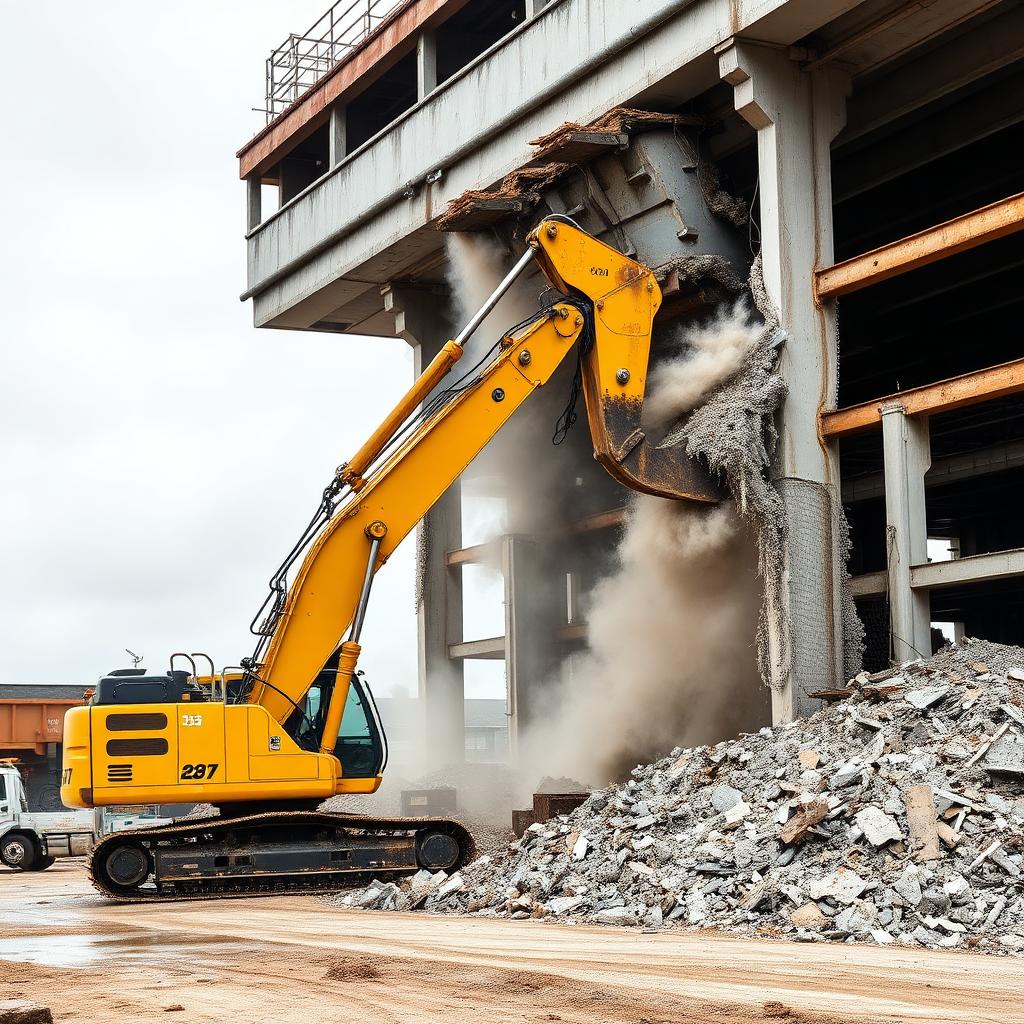
How to hire a commercial demolition contractor in Ontario: a prequalification checklist
Hiring a commercial demolition contractor is not like buying a service off a price list. The contractor you choose will be removing structure, dealing with hazardous materials and working next to occupied space, on your property and under your name. Contractor prequalification is how owners, property managers and general contractors check that a demolition contractor can do the work safely and properly before any bids are compared. This guide sets out a practical checklist for Ontario commercial and industrial projects and explains what each item tells you.
Why prequalification matters on commercial demolition
Demolition carries more risk than most trades. Structure comes out, services have to be disconnected, hazardous materials may be disturbed and debris has to leave the site safely. A low price from a contractor who isn't properly set up can cost far more in delays, stopped work, damage to adjacent space or liability.
Prequalifying first means you only compare bids from contractors you would actually be comfortable hiring. It also gives every bidder the same expectations from the start.
The contractor prequalification checklist
Ask every demolition contractor for the following before you invite a final price:
- Legal company name, address and a contact for the project
- A current WSIB clearance certificate
- A certificate of insurance showing commercial general liability coverage, with your organisation added if your contract requires it
- A written health and safety policy and programme
- Their approach to a site-specific demolition safety plan
- Their recent safety history, and how incidents are reported and reviewed
- Experience with similar commercial or industrial buildings and scopes
- Who supervises on site day to day
- How they handle asbestos and other designated substances, and whether abatement is handled on the same contract or subcontracted separately
- Their process for service disconnects and for confirming them before work starts
- How debris is sorted, hauled and disposed of, and what records you'll receive
- How they phase work around occupied or operating space
- Who obtains permits and files any notices
- References you can contact for comparable work
- Whether they can carry the work that follows demolition, such as framing or fit-out, if you need it
Keep the completed checklist on file with the contract documents.
WSIB clearance certificate: what it is and how to check it
A WSIB clearance certificate confirms that a business is registered with the Workplace Safety and Insurance Board and that its account is in good standing on the date the certificate is issued. In Ontario, most businesses working in construction must have WSIB coverage.
Owners and general contractors ask for clearance because, in general, if you hire a contractor who is not in good standing, you can become responsible for premiums that contractor owes for the work you hired them to do. A current clearance certificate is how you protect yourself.
Practical habits:
- Get the certificate before the contractor starts, not after
- Check that the legal name on the certificate matches the contractor on your contract
- Note the validity dates, and get an updated certificate before it expires; many owners also re-check before each progress payment
- Ask for certificates for subcontractors too, or make the contractor responsible for collecting them
Clearance certificates can be requested online through WSIB. Check WSIB's own guidance for the current process.
Insurance and safety programme evidence
Ask for a certificate of insurance and read it: who the insurer is, the policy period, the types of coverage and whether your organisation needs to be named as an additional insured. The limits you require depend on your project and your own insurance advisor, so set them in the tender documents rather than accepting whatever is offered.
For safety, a written policy is the minimum. Ask how it is applied on site: orientation for workers, daily hazard reviews, supervision, and how incidents and near misses are reported. A contractor who can explain this clearly usually does it.
The demolition safety plan and site controls
Before work starts, the contractor should be able to show how this specific demolition will be carried out safely. A demolition safety plan typically covers:
- The sequence and method for each area or structural element
- Confirmation that services are disconnected and locked out before work begins
- Hoarding, protection and separation from occupied or operating areas
- Dust, noise and vibration control, including silica controls for concrete and masonry
- Fall protection, access and equipment use
- Debris routes, bin locations and haul-off timing
- Emergency procedures and site contacts
On structural work, an engineer may need to review the method. For plants and warehouses, our page on industrial demolition explains how work is phased beside live operations.
Hazardous materials: who surveys, who abates
In Ontario, owners are expected to identify designated substances, such as asbestos, lead, silica and mercury, and share that information with contractors before work is tendered. That normally means a survey by a qualified assessor before you ask for prices.
Ask each bidder how the findings will be handled. Under O. Reg. 278/05, asbestos work is classified as Type 1, Type 2 or Type 3, and Type 3 work usually involves a notice to the Ministry of Labour before it starts. A contractor who handles asbestos abatement on the same contract can keep removals and demolition on one schedule. Otherwise you will be coordinating two contractors and a handover between them.
Writing a clear demolition scope of work
Many disputes on demolition projects trace back to a vague scope. A good demolition scope of work states:
- The address, areas and floors included, with drawings or marked-up plans
- What comes out and what stays, including items to be salvaged or protected
- Whether the work is an interior strip-out or includes structure: interior demolition stops at the structure, while commercial demolition includes it
- The hazardous materials survey and how its findings are handled
- Service disconnects and who carries them out
- Working hours, access, loading and any occupancy restrictions
- Debris handling and disposal records
- The agreed end condition, such as cleared to slab or ready for fit-out
Comparing demolition bids and quotes like-for-like
When demolition quotes come back, line them up against the scope rather than the bottom line. Check that each bid covers the same areas, the same hazardous materials assumptions, protection, disposal, after-hours work and the same end condition. Ask bidders to list exclusions and allowances clearly. A bid that is much lower than the others often has something missing. Our guide to commercial demolition cost in the GTA explains what usually drives the price.
What a demolition contract should cover
You need less a demolition contract template than a contract that ties back to your scope. In general, it should cover the scope and drawings, price and payment terms, schedule and phasing, insurance and WSIB requirements, safety responsibilities, how changes and hidden conditions are priced, debris and disposal, the end condition and how completion is confirmed. Have your own legal advisor review it.
Permits and notices
Demolition that removes structure generally needs a municipal demolition permit, and some projects also need a notice of project to the Ministry of Labour before work starts. Requirements for interior strip-out vary by municipality and scope. Our guide to commercial demolition permits in Ontario covers what is usually involved. Agree up front who is responsible for each permit and notice.
Where Sofisa fits
Sofisa is a WSIB-cleared and insured Ontario commercial general contractor based in Mississauga. We carry out commercial and interior demolition and Type 1–3 asbestos abatement, and we can carry the rebuild, so a project can run on one contract. If you are still building a shortlist, our page on commercial contractors near you lists the GTA cities we serve.
This article is general information, not legal advice. Confirm requirements with a qualified consultant or the Ministry of Labour, Immigration, Training and Skills Development.
Frequently asked questions
What is contractor prequalification for a demolition project?
It is the step where you check a demolition contractor's documents, safety programme, experience and approach before asking for a final price, so you only compare bids from contractors you would be comfortable hiring.
What is a WSIB clearance certificate and why do owners ask for it?
It confirms that a business is registered with WSIB and in good standing on the date it is issued. Owners ask for it because, in general, a principal who hires a contractor that is not in good standing can become responsible for premiums owed for that work.
What should a demolition scope of work include?
The areas included, what comes out and what stays, whether structure is involved, the hazardous materials findings, service disconnects, working hours and access, debris handling and the agreed end condition.
How do I compare demolition quotes fairly?
Check each quote against the same scope: areas, hazardous materials assumptions, protection, disposal, after-hours work and end condition. Ask bidders to list exclusions and allowances so the numbers can be compared like-for-like.
Who handles asbestos and other designated substances before demolition?
The owner is expected to identify designated substances before the work is tendered, usually through a survey by a qualified assessor. Removal then happens before demolition in each area, either by the demolition contractor if it handles abatement on the same contract or by a separate abatement contractor.
Do I need a permit for commercial demolition in Ontario?
Demolition that removes structure generally needs a municipal demolition permit, and some projects also need a notice of project to the Ministry of Labour. Requirements vary by municipality and scope, so confirm them for your project.
Planning a commercial demolition?
Send us the scope, drawings or a description of what's coming down. We'll walk the site and give you a written scope and price.