Interior demolition contractors in Toronto, Mississauga and the GTA.
Sofisa strips out commercial and industrial interiors across Toronto, Mississauga and the GTA — partitions, ceilings, flooring, millwork, washrooms and services. Selective removals on a floor that stays open, or a full strip-out back to bare shell.
Demolition is where a renovation schedule is won or lost. We handle it, so the crew taking the space apart and the crew rebuilding it answer to the same project manager and the same schedule.
Send us your drawings or schedule a walkthrough for project pricing.
Interior demolition contractors: selective work or a full strip-out
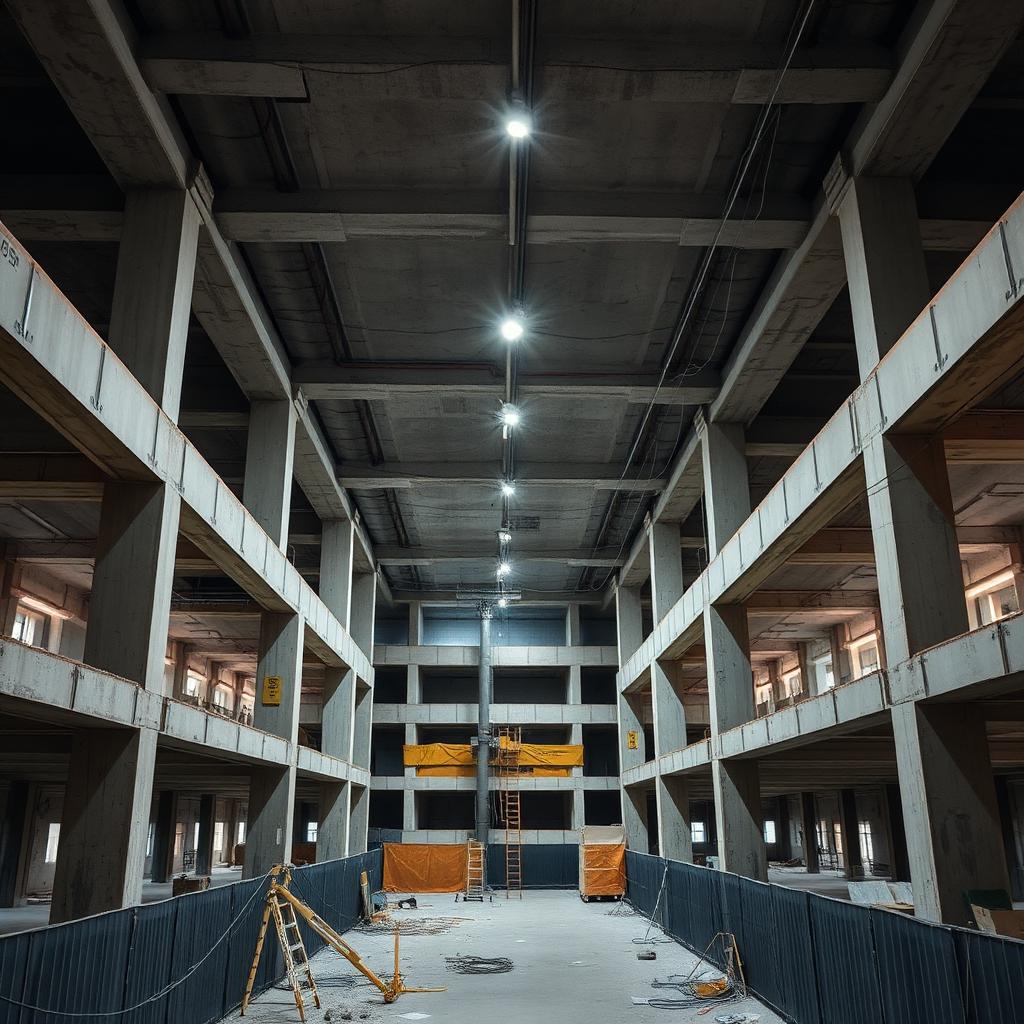
Interior demolition, also called strip-out or selective demolition on most tender documents, is the removal of everything inside a building without touching what holds it up. Structure, envelope and base building stay. Selective demolition removes only what the new drawings supersede, and everything around it stays live. A full strip-out takes partitions, ceilings, flooring, millwork, washrooms, and mechanical and electrical distribution back to base-building points, and hands the space over as a clean shell.
Selective demolition
Only what the new drawings supersede. A wall line moves, a boardroom gets bigger, three offices become open floor. Everything around it stays live and undamaged, which is the harder version of the job — the tolerance for collateral damage is zero.
Full strip-out to shell
Everything inside goes: partitions, ceilings, flooring, millwork, washrooms, and mechanical and electrical distribution back to base-building points. The space is handed over as a clean shell ready for the next fit-out.
 01
01Selective demolition
Selective demolition removes only what the new layout calls for — specific partitions, ceilings, flooring, millwork or abandoned services — while structure, risers and anything being reused stay in place and protected. It is the usual scope when a tenant reconfigures part of a floor or a landlord re-demises a suite.
Before anything is removed we confirm what stays in writing, check the designated substance survey, and make services safe. The work is contained and phased so adjacent areas can keep operating.
Office interior demolition
Office floors are the most common commercial strip-out we run. A typical scope on a 3,000–4,000 sq ft suite is drywall and stud partitions out, washrooms taken back to rough-in, ceiling grid and tile down, flooring and adhesive lifted, and doors, frames and built-in millwork removed — with services capped at base-building points and everything hauled off site.
Work can be selective, keeping the walls the new plan reuses, or a full commercial strip-out back to shell. Vacant suites move fastest because access is unrestricted and the crew can work straight through; occupied floors get phased and contained instead.
We work on office, retail and industrial properties throughout Mississauga, including the Airport Corporate and Hurontario corridors, and we are based in Mississauga ourselves — so a site walk in Mississauga is usually easy to arrange. Tenant-improvement demolition is normally the first phase of a renovation, and most clients keep the new partitions and ceilings and the finishing trades on the same contract.
Drywall and partition removal
Stud and drywall partitions, bulkheads and soffits taken out cleanly, with the walls the new plan keeps left undamaged.
Washroom demolition
Toilets, sinks, partitions, tile and finishes removed and the room taken back to rough-in for the new layout.
Ceilings and flooring
T-bar grid, tile and drywall ceilings down; carpet, VCT, tile, adhesive and underlayment lifted off the slab.
Doors, glazing and millwork
Doors, frames and hardware, interior glazing, reception desks, casework and built-ins stripped out.
Selective demolition
Only what the new drawings supersede comes out, so the space stays usable and the rebuild starts from what already works.
Debris, disposal and turnover
Bins, chutes, dock and elevator bookings, haul-off and a swept space handed over ready for the renovation to begin.
Send us your drawings or schedule a walkthrough for project pricing.
What comes out
- Steel stud and drywall partitions, bulkheads and soffits
- T-bar grid, drywall ceilings and above-ceiling debris
- Flooring — carpet, tile, VCT, adhesives and underlayment
- Millwork, casework, reception desks and built-ins
- Washroom fixtures, partitions and finishes
- Kitchen and back-of-house equipment
- Doors, frames, hardware and interior glazing
- Non-structural masonry and infill
- Mechanical, electrical and sprinkler distribution cut back to base-building points
- Racking, mezzanine decking and industrial fit-up
Commercial spaces we strip out
- Office floors and whole office buildings
- Retail units and multi-store programs
- Restaurants and hospitality spaces
- Medical and dental clinics
- Warehouse and industrial space
- Base-building and landlord turnover work
Demolition on a floor that stays open
Most of this work happens in a building that never closes. The tenants above and below keep working, the store next door keeps trading, and the landlord expects the lobby to look the same on Monday morning as it did on Friday.
That means hoarding and poly go up before anything comes down, dust control runs inside the work zone, material leaves on protected paths, and noisy work moves to nights or weekends when the building's rules say so.
Containment and after-hours access change what a strip-out costs. They belong in the scope conversation before the number, not in a change order after it. For what actually moves that number, see commercial interior demolition cost factors in the GTA.
For an example of the phasing, see how a multi-floor strip-out to shell is sequenced.
For a shorter take on the strip-out variables, see interior strip-out cost in the GTA.
Where abatement, permits and the rebuild fit
Older commercial buildings often hold materials that have to come out before demolition does. Where that scope exists, it is abated first — we handle abatement, so it stays on one contract and one schedule instead of waiting on another contractor's availability.
Whether the work needs a permit depends on the municipality and on what is actually being removed. Our guide to commercial demolition permits in Ontario covers the question in more detail.
When the scope goes past the interior — slab openings, structural steel, concrete breaking, exterior walls — that is commercial demolition. Same team, different scope.
Most strip-outs are the first phase of a rebuild. Drywall and framing goes back in, then interior fit-out finishes the space.
Debris, disposal and what you get back
Everything that comes out has to leave the building, and on an occupied floor that is a logistics problem before it is a disposal problem — elevator bookings, dock windows, chute and bin placement, street occupancy.
Material is sorted on the way out where the site allows it, hauled off, and the space is swept down. What "ready" means gets agreed before we start — bare slab, capped services, patched deck — so the next trade can begin without a punch list of demolition leftovers.
How a strip-out runs
- 01
Site walk and scope — we walk the space with your drawings, confirm what stays and what goes, and flag anything that changes the sequence.
- 02
Quote — a written scope and price, with containment, access hours and disposal accounted for.
- 03
Pre-start — hoarding, protection, building notifications, dock and elevator bookings, and any abatement that has to happen first.
- 04
Demolition — phased so the building keeps running, with the work zone contained the whole time.
- 05
Haul-off and handover — material out, services capped, space swept, ready for the next trade.
Strip-out work across Toronto and Mississauga
In Mississauga most of the strip-outs we price are office and flex space in the Airport Corporate, Meadowvale, Heartland and Dixie–Eglinton corridors — a suite between tenancies, a washroom block being reconfigured, a warehouse office coming back to shell before the next lease. Full detail on that market is on interior demolition in Mississauga. Where the strip-out is the first stage of a rebuild, we carry the sequence through under commercial renovation Mississauga.
Toronto adds the building's rules on top of the scope: freight elevator windows, dock bookings, protected paths through finished common areas, and demolition noise confined to hours the tenants accept. Those constraints do not change what comes out — they change how long it takes and what it costs, which is why they are settled at quote stage. Full detail on that market is on interior demolition Toronto.
Steeles, Airport Road and Torbram industrial-office strip-out, Queen Street office soft demo and plaza gut-outs are covered on interior demolition in Brampton. Airport, Dixon and Carlingview industrial-office strip-out, Bloor West and Kipling office soft demo and Queensway plaza gut-outs are covered on interior demolition in Etobicoke. Concord and Steeles industrial-office strip-out, Highway 7 office soft demo and Woodbridge plaza gut-outs are covered on interior demolition in Vaughan. York Region east work is covered on interior demolition in Markham, and Halton work on interior demolition in Oakville and interior demolition in Burlington. All of it runs on the same crews and the same senior supervision.
Selective demolition — deciding what stays
The value in a selective strip-out is in what you do not remove. Walls the new plan keeps, ceiling grid that is still sound, distribution that can be reused — every one of those left intact is money that does not have to be spent putting it back.
So we mark up the demolition plan before pricing it: what comes out, what stays and gets protected, what is cut back to a base-building point and capped. Anything ambiguous on the drawings gets raised then, not once a crew is standing in front of it with a reciprocating saw.
Heavier scope — slab openings, structural steel, concrete — is commercial demolition; hazardous material is commercial asbestos abatement; and the rebuild starts with commercial drywall and framing. One contract, one senior supervisor across all of it.
How to compare interior demolition contractors
When you compare interior demolition contractors, compare the scope behind each number, not the total. Check that every price covers the same things: protection and hoarding for the areas that stay in use, the after-hours shifts the building requires, elevator and dock bookings, disposal, services cut back and capped at base-building points, and the condition the space is handed back in.
Ask who deals with designated substances. The owner's survey should be in the tender package — see why a designated substance survey matters before commercial renovation in Ontario — and a contractor that handles abatement removes a hand-off between companies. Older stock is where it matters most; asbestos in commercial buildings built before 1990 covers what tends to turn up.
Then check the paperwork: WSIB clearance in good standing, general liability insurance — we carry $5M — and a named supervisor on site. Finally, ask whether the same contractor can carry the rebuild, so strip-out and fit-out sit on one schedule under one project manager.
Interior demolition services for commercial strip-out and selective work
Interior demolition services on commercial floors mean full strip-out to shell or selective removals that leave demising walls and usable distribution in place. Partitions, ceilings, flooring, millwork and M&E cut-backs come out under hoarding and dust control while the structure stays. Commercial and industrial only — not residential demolition.
Sequencing interior demolition with abatement and drywall on one contract
The commercial sequence is survey, Type 1–3 abatement and clearance where required, then interior demolition, then drywall and framing. Sofisa handles that chain under one senior supervisor so each handover is a scheduling decision rather than a gap between companies.
Interior demolition questions
What is the difference between interior demolition and selective demolition?
Selective demolition is a subset of it. You remove only what the new drawings supersede and leave the rest intact. A full interior demolition takes the space back to shell. Most commercial jobs sit somewhere between the two.
Can you work while the building stays open?
Yes. Hoarding, dust control and phased work zones keep the rest of the floor running, and noisy work moves to nights or weekends when the building's rules or the tenants require it.
Do you handle the disposal?
Yes. Bins, chutes, dock and elevator bookings, haul-off and clean-up are part of the scope, not something you arrange separately.
What happens if there are hazardous materials?
That scope is identified before demolition begins and abated first. We handle abatement, so it stays on one contract instead of stalling while a second contractor is scheduled.
Can you do the rebuild as well?
Yes — drywall and framing, and full interior fit-out. Most clients hire us for both so demolition and rebuild sit on one schedule under one project manager.
What do you need to give us a price?
Drawings or a scope of work, the building's access rules and hours, and a site walk. If drawings do not exist yet, tell us what is coming out and we will walk it.
Can you review our drawings before quoting?
Yes. Send the demolition plan or the architectural set and we will review it, mark what we read as coming out, and raise anything that looks unclear before we price it. If the drawings are still in progress, a scope list and a site walk are enough to start.
What is usually included in an office strip-out?
Typically partitions and drywall, ceilings and grid, flooring and adhesives, doors, frames and interior glazing, millwork and reception casework, washroom fixtures and finishes, and mechanical and electrical distribution cut back to base-building points. Containment, protection and disposal are part of the same scope.
How is this different from commercial demolition?
Interior demolition stops at the structure. Commercial demolition includes it — slab openings, structural steel, concrete and exterior walls.
What areas do you cover?
Toronto, Mississauga, Brampton, Vaughan, Etobicoke, Oakville, Markham and the surrounding GTA.
How much of a floor can stay in use while you strip out the rest?
That depends on where the demising line can be drawn. If the work zone can be hoarded off with its own access and its own material route, the rest of the floor usually keeps running. Where the only route in and out crosses occupied space, the work tends to move to evenings or weekends instead.
Do you work after hours in Toronto office towers?
Yes, and on most downtown and midtown floors it is the only way the job works — freight elevator windows, dock bookings and noise restrictions are set by the building, not by us. Those hours go into the scope and the price before we start.
What condition is the space left in?
Whatever we agree in writing beforehand — bare slab, capped and labelled services, patched deck, swept down. Defining the end state up front is what keeps the next trade from inheriting a punch list of demolition leftovers.
Do you strip out retail units and restaurants as well as offices?
Yes. Retail units, restaurant back-of-house and kitchen fit-up, clinics and warehouse office space all come out the same way, with the plaza or the tower around them still open for business.
What do interior demolition services typically include on a commercial floor?
Partitions and drywall, ceilings and grid, flooring and adhesives, doors and interior glazing, millwork, washroom finishes, and mechanical/electrical cut back to base-building points — plus containment, protection and disposal. Structure stays unless the scope is written as commercial demolition.
Can interior demolition services run while the rest of a commercial building stays open?
Often yes. Hoarding, dust control and separate haul routes keep adjacent suites operating; noisy stages move to evenings or weekends when the building requires it.
How do you sequence abatement before interior demolition services start?
The designated substance survey is read first; flagged asbestos is removed and cleared under O. Reg. 278/05, then strip-out opens the floor. Handling both keeps that handover on one schedule.
Scopes that usually run on the same contract
Most GTA projects need more than one of these. Running them under one contract with senior supervision keeps the sequence — and the accountability — in one place.
Commercial and industrial demolition
Structural teardown and heavy removals where the work goes past the interior.
Commercial and industrial demolitionCommercial asbestos abatement
Designated substances cleared out of the way before the strip-out proceeds.
Commercial asbestos abatementCommercial drywall and framing
Steel stud framing and board that rebuild the layout once the space is stripped.
Commercial drywall and framingRelated resources
Send the scope. We'll price the strip-out.
Send us your drawings or schedule a walkthrough for project pricing. Request a quote.
- (647) 963-4310
- info@sofisa.ca
- Sofisa Group Inc. · Mississauga, ON