Commercial demolition services in Toronto, Mississauga and the GTA.
Sofisa takes down commercial and industrial buildings and the interiors inside them, across Toronto, Mississauga and the GTA. Structural teardown, full strip-out to shell, and selective removals on sites that stay partly in use.
Demolition sets the schedule for everything that follows it. We handle the work and the rebuild that comes after on the same contract, so the sequence is one team's problem rather than a handoff between three.
- WSIB clearance — Good Standing (Clearance ID D0000JZAHE)
- $5M general liability insurance
- One contract, senior supervision
Key takeaways
- Sofisa is a commercial demolition contractor for Toronto, Mississauga and the GTA, covering structural teardown, industrial demolition and interior selective demolition. It handles abatement and the rebuild on the same contract.
- Selective demolition removes chosen elements (partitions, ceilings, finishes, millwork, services) and leaves the structure and everything marked to stay intact.
- Under Ontario's Building Code Act, demolishing a building or part of one needs a permit before work starts (s. 8).
- The owner's designated substance list (OHSA s. 30) comes before demolition is priced or started.
- Larger demolition projects can trigger a waste audit and waste reduction work plan under O. Reg. 102/94.
- WSIB-cleared, $5M general liability insurance, IICRC-aligned. Commercial only.
Commercial demolition services cover teardown and strip-out
Commercial demolition services on this page are the structural teardown and the strip-out that runs with it. Partial removals — a wing, a slab opening, a mezzanine — are the more common request, and what stays standing has to stay stable. Where the structure stays and only the inside comes out, that work is interior demolition, on its own page. Services are disconnected and confirmed dead before structure is touched, and hazardous material is cleared first.
- Structural demolition of commercial and industrial buildings
- Partial and phased structural removals
- Full interior strip-out to base building
- Selective demolition around occupied or operating areas
- Concrete cutting, breaking and removal
- Non-structural masonry, infill and slab openings
- Site clearing and preparation for redevelopment
- Debris haul-off and disposal
- Hazardous material scope abated before demolition proceeds
 01
01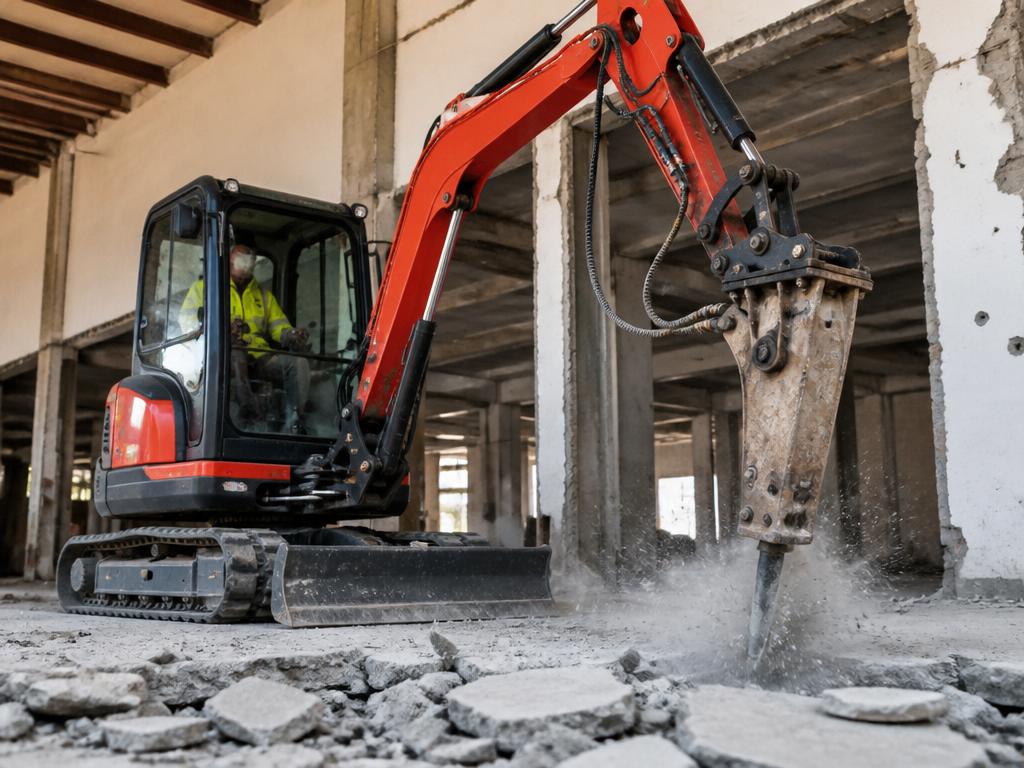 02
02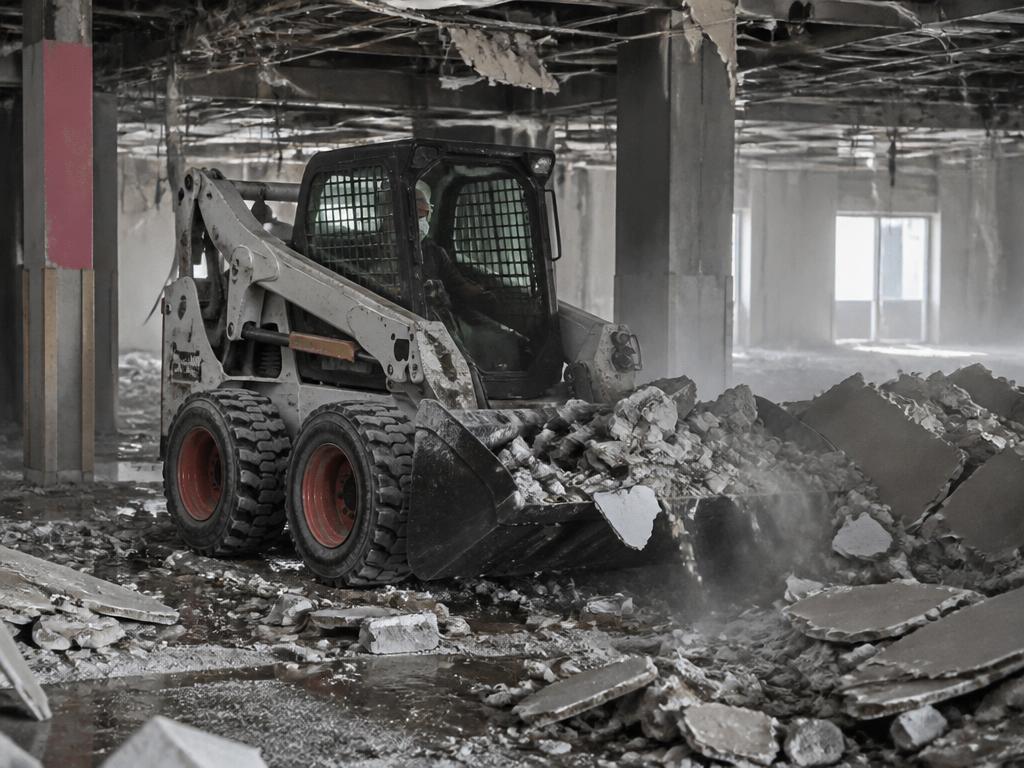 03
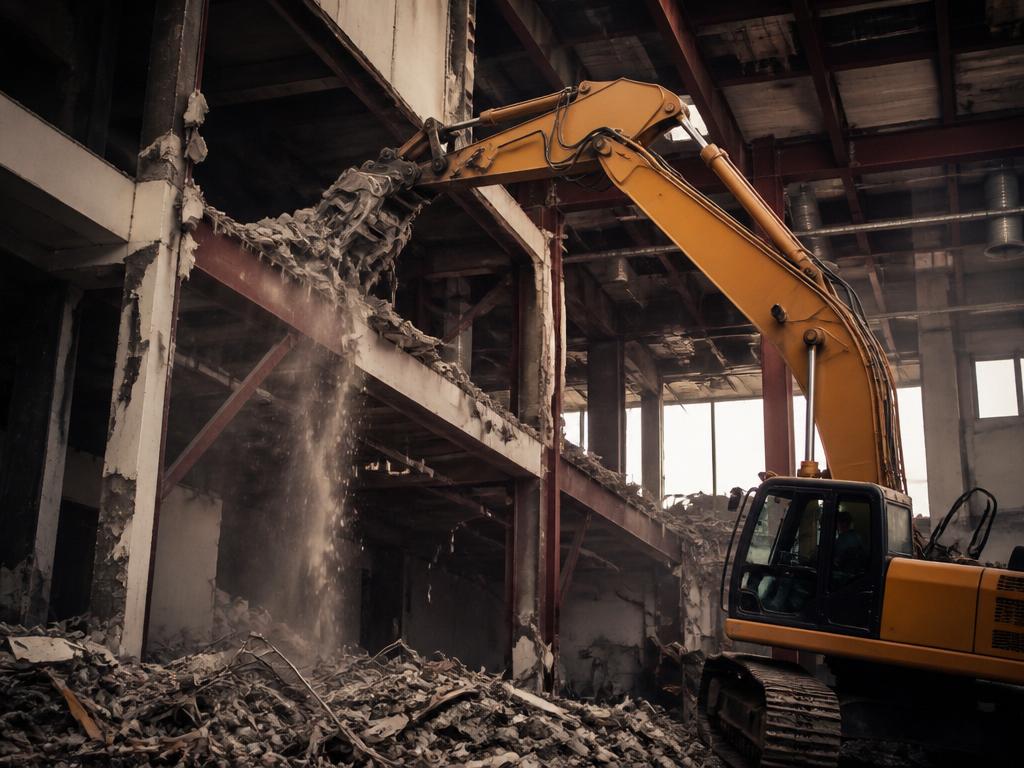
03Structural demolition
Full or partial teardown of a commercial or industrial structure, done by mechanical means and sequenced around what has to stay standing. Partial removals — taking down a wing, opening a slab, removing a mezzanine — are the more common request, and they need more planning than a clear-site teardown because everything left behind has to stay stable and intact.
Industrial and warehouse demolition
Warehouse and industrial buildings bring their own constraints: racking and mezzanines to strip out, heavy slabs, high bays, equipment foundations, and often a neighbouring unit still operating through the work. Scope gets phased around what the site can actually shut down.
Interior and selective demolition
Selective demolition is the planned removal of specific building elements while the structure and the parts marked to stay are protected. Before anything comes out, we walk the space with the owner or designer and tag what stays: base-building elements, risers, sprinkler and fire-alarm devices, and anything slated for reuse. Risers, shafts and the finishes outside the work area are protected before the strip-out starts. Material is separated as it comes out so metal, drywall and other streams can go to recycling where the facility accepts them, and larger projects follow the waste audit and work plan rules in O. Reg. 102/94.
Where the structure stays and only the inside comes out, that is interior demolition — partitions, ceilings, flooring, millwork and services stripped back to base building. It is a different scope with different controls, and it has its own page with the detail on occupied-floor work.
Preparing a site for renovation or redevelopment
Most demolition here is the first phase of something else — a renovation, a base-building upgrade, a change of use, a redevelopment. What matters is not just what comes down but the condition the site is left in: slab, capped services, clear access, and a defined starting point the next trade can build from. We agree that end state before we start rather than discovering it at handover.
Planning and sequencing before anything comes down
The demolition itself is rarely the hard part. The sequence is.
Services have to be disconnected and confirmed dead before structure is touched. Hazardous material scope has to be identified and cleared first. Neighbouring tenants, adjacent structures and shared walls have to be protected. Access, hoarding, dock windows and street occupancy have to be booked. Whether the work needs a permit depends on the municipality and the scope — our guide to commercial demolition permits in Ontario goes into that in more detail.
We work this out at quote stage, not on the first morning.
Permits, the designated substance survey and pre-start timing
Before a commercial demolition starts, two documents usually set the timeline. The first is the designated substance survey. Under Ontario's Occupational Health and Safety Act the owner has to determine which designated substances, such as asbestos, are present and list them in the tender documents, and anything flagged in the demolition area is removed before the teardown begins. Why that belongs in the tender package is covered in designated substance surveys before commercial renovation in Ontario.
The second is the permit. Taking down all or part of a building generally needs a demolition permit from the municipality, while an interior strip-out may fall under the building permit for the alteration or need none at all, depending on the city and the scope. The permit guide linked above walks through it.
Where the asbestos removal is Type 3 under Ontario Regulation 278/05, the Ministry of Labour has to be notified before the work begins, and clearance air testing follows before the enclosure comes down. Both are durations that belong in the programme, and the notice side is set out in Ontario Type 3 asbestos notice timelines. We map these items into the schedule at quote stage, so the demolition start date is a real date.
Working on a site that stays in use
Plenty of commercial demolition happens on sites that never fully close — a plaza where the other units keep trading, a floor above a business that keeps operating, a warehouse running one half while the other comes down.
That means hoarding and protection first, dust and noise controlled at the boundary, structural work phased so nothing adjacent is put at risk, and noisy work scheduled to the building's hours rather than ours. Containment and restricted access change what a job costs, so they belong in the scope conversation up front.
Commercial demolition waste disposal and recycling
Everything that comes down has to leave, and on a constrained commercial site that is a logistics problem before it is a disposal one — bin placement, dock and elevator windows, haul routes, street occupancy. We size bins to the access, book windows with property management, and separate material at the point of removal so as much as possible goes to recycling instead of landfill.
Metals go to scrap, clean concrete and masonry to aggregate recyclers, and clean wood and cardboard to licensed processors; mixed debris goes to a licensed transfer station. On Ontario demolition and construction projects of 2,000 m² or more, O. Reg. 102/94 and 103/94 require a waste audit, a waste reduction work plan and source separation of materials such as concrete, steel and wood — we build those into the pre-start plan. Asbestos waste from the abatement phase is sealed in labelled containers and taken to a site licensed to accept it. Hauler weight tickets are kept so diversion can be reported for LEED or ESG files, and the site is left in the agreed condition rather than merely emptied.
Where demolition sits in the rest of the job
Where hazardous materials are present, that scope is cleared first — see commercial asbestos abatement, which we handle on the same contract, so it does not stall waiting on another contractor.
After the teardown, drywall and framing puts the structure back, and interior fit-out takes the space through to handover. Most clients run demolition and rebuild as one contract under one project manager.
Where our demolition work sits across the GTA
From our base in Mississauga, most of the heavier work runs through the industrial and flex belt — Mississauga, Brampton, Etobicoke and Vaughan — where the buildings are warehouse, manufacturing and single-storey commercial, and the constraints are usually neighbouring tenants and truck access rather than street frontage.
More detail on Peel industrial bays, Airport Corporate strip-out, occupied versus vacant work, designated substances and haul-off on our commercial demolition in Mississauga page.
Toronto is the opposite problem. Restricted lay-down space, dock and elevator bookings, noise by-law hours and shared loading with buildings that stay open. That is a logistics plan as much as a demolition plan, and it belongs in the price rather than in a change order.
More detail on downtown access, occupied strip-out, after-hours work, permits and designated substances on our commercial demolition in Toronto page.
Warehouse and plant teardown, racking and mezzanine removal and work beside bays that keep shipping are set out on our commercial demolition in Brampton page.
Airport-adjacent industrial, Queensway condo bays, Sherway and Lakeshore plaza retail and grade-and-dock haul-off across west Toronto are set out on our commercial demolition in Etobicoke page, and Concord industrial tear-down, Highway 7 office soft demo and Vaughan Metropolitan Centre strip-out on commercial demolition in Vaughan and Halton work on commercial demolition in Oakville and York Region east work on commercial demolition in Markham and Halton work on commercial demolition in Burlington.
Structural work versus strip-out — what it changes
Structural scope brings in load paths, temporary support, service disconnects that have to be confirmed in writing, and a sequence you cannot improvise once it starts. Strip-out is faster and more forgiving, but it produces far more material per day, so the bottleneck moves to how quickly debris can leave the building.
Most projects contain both. Where the work stops at the structure it is commercial interior demolition; where designated substances are in the way it is commercial asbestos abatement first; and when the space is being rebuilt, commercial drywall and framing follows on the same contract.
What changes the price of a demolition scope
Two teardowns of the same square footage rarely price the same. The building, the neighbours and the end state decide most of it before a machine ever arrives.
- Structural teardown versus strip-out — and whether it is partial, phased or full
- Occupied floors or neighbouring units still operating beside the work
- Designated substances found on survey and the abatement that has to clear first
- Access, lay-down area, dock booking, haul-off routes and street occupancy permits
- End state defined in writing — back to slab, to grade, or shell with capped services
- Permits, confirmed service disconnects and any temporary support the sequence requires
For a full breakdown before we walk the site, read what drives commercial demolition cost in the GTA. Where the scope is strip-out rather than structure, commercial interior demolition cost factors in the GTA covers the same ground for an occupied floor.
Where the teardown is the first phase of a rebuild rather than the end of the building, it runs straight into commercial renovation in Mississauga on the same contract.
Send drawings, the survey and the building's access rules — or call (647) 963-4310.
How to compare commercial demolition contractors
When you compare commercial demolition contractors, compare scopes, not totals. Check that each price covers the same things: service disconnects and make-safe, protection of the areas that stay in use, hauling and disposal, and the condition the site is handed back in. Ask who handles asbestos and other designated substances — a contractor who handles abatement on the same contract removes a hand-off and a schedule gap.
Confirm WSIB clearance, liability insurance and a named site supervisor, and ask how the work will be phased around tenants, dock access and working hours. Finally, ask whether the same contractor can carry the rebuild. Running commercial demolition and fit-out under one contract keeps one schedule and one point of accountability.
How a demolition project runs
Site walk and scope
we walk the site with drawings or a scope of work, confirm what comes down and what stays, and identify anything that changes the sequence.
Quote
a written scope and price covering the demolition, protection, access hours, disposal and the condition the site is handed over in.
Pre-start
disconnects confirmed, hazardous material scope cleared, protection and hoarding in place, access and haul routes booked.
Demolition
phased so adjacent structures and operating areas stay protected throughout.
Haul-off and handover
material out, site cleared to the agreed end state, ready for the next phase.
Demolition contractors and demolition companies for Toronto commercial sites
Sofisa works as demolition contractors and a demolition company for Toronto, Mississauga and GTA commercial and industrial buildings — structural teardown, partial removals and interior strip-out. Demolition services Toronto owners need usually sit beside abatement and rebuild; we handle those on the same contract under one senior supervisor so the programme does not stall between firms. Commercial and industrial only — we take commercial and industrial demolition only.
Specialized demolition on commercial and industrial GTA scopes
Specialized demolition on our commercial jobs means slab openings, selective structural steel or concrete cuts, mezzanine drops, phasing beside live bays, and industrial equipment foundations — not open-air house knockdown. Those scopes still start with the designated substance survey, then abatement where required, then the tear-out. Occupied sites get hoarding, protected haul routes and after-hours stages written into the price.
Commercial demolition questions
Do you handle both structural demolition and interior strip-out?
Yes. Structural teardown, partial structural removals and full interior strip-out are all in scope, and they can run as one contract when a project needs both.
What is the difference between commercial demolition and interior demolition?
Interior demolition stops at the structure — the building stays, everything inside comes out. Commercial demolition includes the structure itself: slab openings, structural steel, concrete and full or partial teardown.
Do you work on industrial and warehouse buildings?
Yes. Racking and mezzanine removal, equipment foundations, heavy slabs and high-bay space are part of the scope, phased around whatever the site needs to keep running.
Can demolition happen while part of the site stays open?
Often, yes. Work gets phased and contained so adjacent units or floors keep operating, with protection at the boundary and noisy work scheduled around the site's hours.
What happens with hazardous materials?
That scope is identified before demolition starts and cleared first. We handle abatement on the same contract instead of waiting on a second contractor.
Who handles the service disconnects?
Disconnects have to be completed and confirmed before structural work begins. We coordinate that sequencing as part of the pre-start rather than leaving it to be discovered on site.
Do you handle the debris and disposal?
Yes. Bins, haul routes, dock and access bookings, haul-off and clean-up are part of the scope. On projects of 2,000 m² or more we also handle the Ontario waste audit and source-separation requirements.
Can you do the rebuild as well?
Yes — framing, drywall and full interior fit-out. Most clients run demolition and rebuild together so the two sit on one schedule.
What do you need to give us a price?
Drawings or a scope of work, the site's access constraints and hours, and a site walk. If drawings do not exist yet, tell us what is coming down and we will walk it.
What areas do you cover?
Toronto, Mississauga, Brampton, Vaughan, Etobicoke, Oakville, Markham and the surrounding GTA.
How do you phase demolition on a site that keeps operating?
The site gets split into zones and the work is sequenced zone by zone, with a hard boundary between the demolition side and the operating side. Protection and hoarding go in before anything comes down, haul routes are kept off the paths staff and customers use, and the loud or dusty operations move to the hours the building allows.
How is the debris handled on a tight Toronto site?
Bin placement, dock windows, haul routes and any street occupancy are worked out before mobilisation, because on a constrained downtown or midtown site the removal logistics govern the schedule more than the breaking does. Material is sorted on the way out where the site allows it.
Do you do the demolition and the rebuild under one contract?
Yes. Demolition, abatement where it applies, and the drywall, framing and fit-out that follow can all sit on one contract with one senior supervisor, so the handover between phases is a scheduling decision rather than a gap between companies.
What is left at the end of a teardown?
Whatever end state we agree in the scope — cleared to slab, cleared to grade, capped services, or a defined boundary left ready for the next phase. It is written into the quote so there is no argument about what 'finished' means.
Are you a demolition company Toronto owners can hire for commercial work only?
Yes. Sofisa’s demolition services cover commercial and industrial buildings across Toronto, Mississauga and the GTA — structural teardown, partial removals and interior strip-out. We take commercial and industrial demolition only.
What counts as specialized demolition on a GTA commercial project?
Work that is not a simple open-air knockdown — slab openings, selective structural steel or concrete removals, mezzanine drops, phasing beside live bays, and industrial equipment foundations. Those scopes need the same survey-first sequencing as any other commercial demolition.
Do commercial demolition contractors need the designated substance survey before bidding?
Firm prices should. Without the survey, classification of asbestos or other designated substances is unknown and the programme shifts. We can give planning ranges, then lock the number once the report is in hand.
What is selective demolition?
It's the planned removal of specific parts of a building, such as partitions, ceilings, flooring, millwork and services, while the structure and the elements marked to stay are protected. It's the usual first step of a commercial renovation or fit-out.
Is selective demolition the same as a strip-out?
Mostly. "Strip-out" usually means taking an interior back to the shell. Selective demolition can be narrower and remove only some elements.
Do I need a permit for selective demolition in Ontario?
Often, yes. The Building Code Act requires a permit before anyone demolishes a building or part of one. Your municipality confirms whether your scope qualifies.
Building Code Act, 1992 · City of Toronto: Apply for a building permit · City of Mississauga, Building permits
Does the asbestos check happen before demolition?
Yes. The owner must identify designated substances before the project begins, and any asbestos removal follows O. Reg. 278/05 before demolition proceeds.
Scopes that usually run on the same contract
Most GTA projects need more than one of these. Running them under one contract with senior supervision keeps the sequence — and the accountability — in one place.
Commercial asbestos abatement
Where designated substances are present, abatement clears before the structure comes down.
Commercial asbestos abatementCommercial interior demolition
Strip-out of partitions, ceilings, flooring and services inside a building that stays standing.
Commercial interior demolitionCommercial drywall and framing
Steel stud framing and board that put the interior back once the teardown is done.
Commercial drywall and framingSend the scope. We'll price the teardown.
- (647) 963-4310
- info@sofisa.ca
- Sofisa Group Inc. · Mississauga, ON