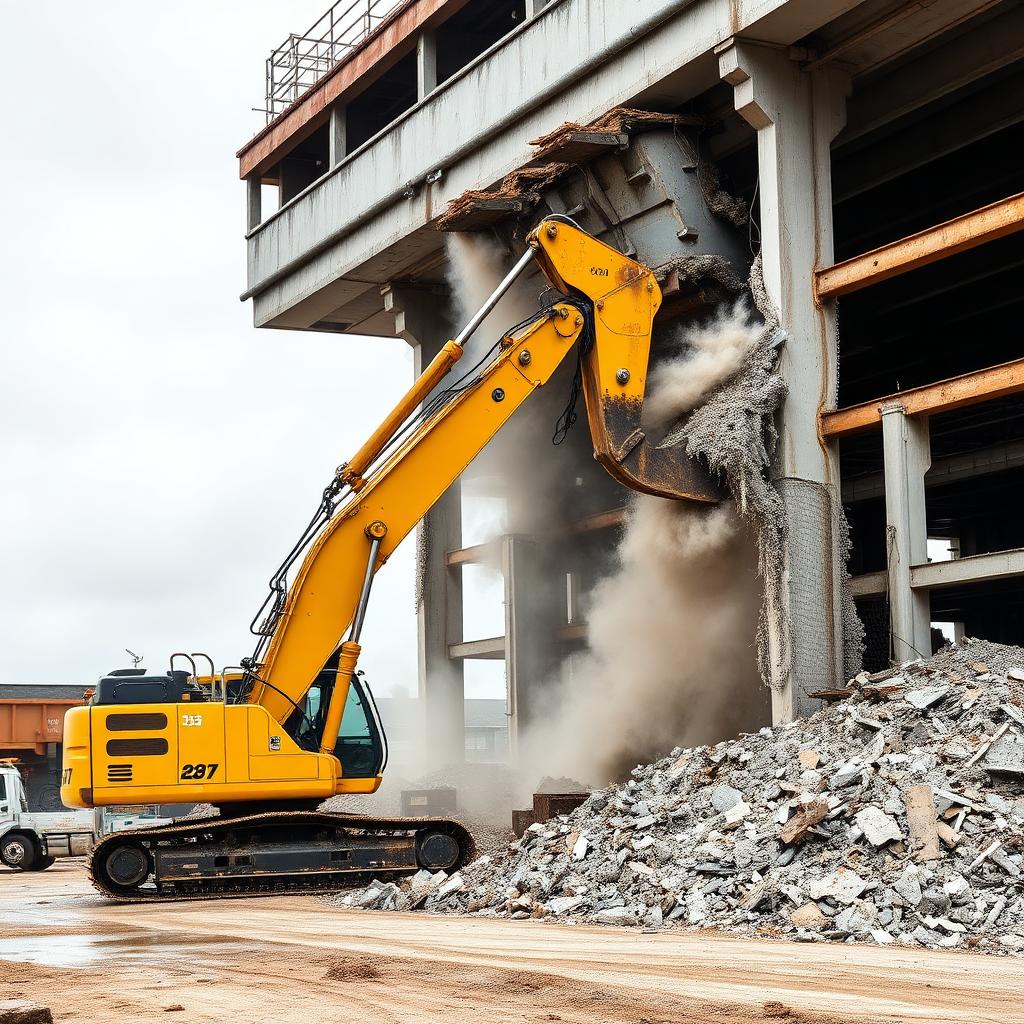
Industrial demolition for plants, warehouses and operating facilities
Sofisa Group Inc. is a WSIB-cleared and insured Ontario commercial general contractor based in Mississauga. We take on industrial demolition across Mississauga and the GTA for building owners, facility managers, industrial operators and general contractors who need space cleared safely and in the right order. That might be a full warehouse interior, a production area that has to be stripped back to the slab, or selective structural work inside a building that stays in operation. This page covers the service and how we scope it. For the wider picture, see our commercial demolition services.
Industrial demolition scope we take on
Industrial sites differ from office or retail strip-outs. Floor areas are larger, ceilings are higher, services are heavier, and there is often process equipment, racking or mezzanines in the way. Typical scopes include:
- Plant and warehouse interiors: office pods, mezzanines, partition walls, ceilings, lighting and abandoned services removed to open the floor for a new tenant or use.
- Equipment-area strip-outs: clearing the areas around old production lines, including bases, platforms, guarding and redundant services, once the owner's equipment has been isolated and removed.
- Structural demolition: removal of structural elements, additions or full structures where the engineering, permits and sequencing are in place.
- Selective demolition in operating facilities: work in one zone while the rest of the building keeps running, with separation, dust control and agreed access routes.
For interior-only work in commercial space, our interior demolition team handles the same sequence at a smaller scale.
Industrial dismantling and decommissioning
Some industrial projects start before demolition does. A plant closing a line or vacating a building usually goes through decommissioning first: the owner and their equipment specialists shut down and isolate processes, drain and remove equipment, and clear stored materials. Dismantling follows, taking apart racking, mezzanines, platforms and redundant services, and then comes the demolition of interiors or structure. We take over once equipment has been isolated and removed, and we can plan the sequence with your team from the start. Our industrial decommissioning guide for the GTA walks through the stages.
Hazardous materials come first
Older industrial buildings can contain asbestos, lead coatings, PCBs, mercury and silica-bearing materials. In Ontario, designated substances must be identified before construction work begins, and the owner is expected to share that information with contractors. We start every industrial demolition with a hazardous building materials assessment: we coordinate a qualified assessor's survey and lab analysis, then plan the abatement and the demolition around the findings.
Because Sofisa also carries out Type 1–3 asbestos abatement and mould abatement, the hazmat work and the demolition can run under one contract and one schedule. That avoids handing the site between separate trades, and keeps the abatement sequence and the demolition sequence planned together.
Structural demolition and permits
Structural work needs more than a crew and equipment. Depending on the scope, it can involve an engineer's review, a demolition permit from the municipality, utility disconnects and a plan for adjoining structures. Our guide to commercial demolition permits in Ontario explains what is usually involved. We build those steps into the schedule from the start, so the permit isn't the thing that holds the project up later. Confirm requirements for your specific project with the municipality and your engineer.
Working inside an operating facility
Many industrial clients can't shut down for demolition. When part of the building stays live, we plan:
- Physical separation between the work zone and production or storage areas
- Dust control and negative air where hazardous materials are involved
- Access routes, loading and haul-off times that don't block shipping
- Daily coordination with the facility manager on any shutdown of services
Equipment decommissioning and process shutdown are usually handled by the owner or their specialists. We work to their sequence and then take the space back to the condition the next phase needs.
How an industrial demolition project runs
- Scope review and site walk. We look at the space, access, services and drawings, and the hazardous materials information you already have.
- Assessment and abatement plan. If there isn't a current assessment, we coordinate one. Abatement is scheduled before demolition in each area.
- Permits, disconnects and protection. Utilities are isolated, protection is installed and adjoining areas are separated.
- Demolition and haul-off. Material is removed in a planned order, with metals and other recoverable materials separated where practical.
- Handover. The space is left ready for the next trade, whether that is a fit-out, a new slab or a new tenant.
You can see examples of this work in our major structural demolition project and our warehouse and industrial interior project. For costs, our commercial demolition cost guide for the GTA explains what drives pricing. We price each job from a scope review rather than a rate sheet.
Industrial demolition contractors for Mississauga and the GTA
We are based in Mississauga and work across Peel, Toronto, Etobicoke, Vaughan, Oakville, Markham and Burlington. For Mississauga-specific access and haul-off details, see commercial demolition in Mississauga.
Industrial demolition across Ontario
Most of our industrial work is in Mississauga, Peel, Halton, Toronto and York Region, where much of the GTA's warehouse and light-industrial space is. For industrial sites elsewhere in Ontario, send the address and scope and we'll tell you whether and how we can take it on.
Frequently asked questions
Industrial demolition to scope? Send us the site details.
Tell us about the building, the area to clear and your timeline. We'll set up a site walk and scope review.