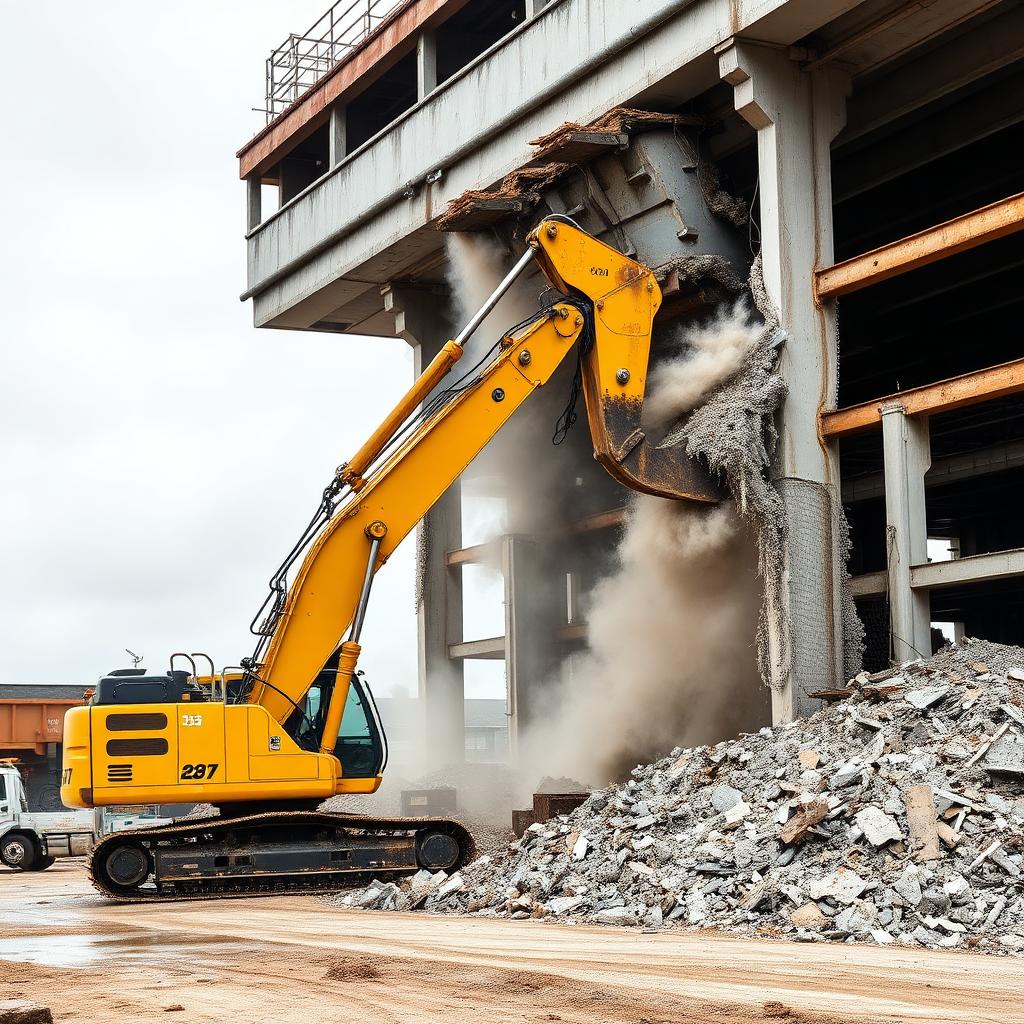
Industrial decommissioning in the GTA: a planning guide for plant and facility owners
Industrial decommissioning is the work of taking a plant, production area or warehouse out of service safely and leaving the space ready for what comes next. That might be a new tenant, a sale, a new process line or full demolition. It is more than a strip-out: services have to be isolated, equipment removed, hazardous materials dealt with and structures taken down in the right order. This guide is for plant owners, facility managers, industrial landlords and developers in the GTA who are planning a decommissioning project.
Decommissioning vs demolition: what's different
Demolition removes building elements. Decommissioning comes first and is broader: it covers shutting down processes, clearing out equipment and materials, and making the site safe before any demolition starts. On many industrial projects, the owner's own staff or equipment specialists handle process shutdown and equipment removal, and a demolition contractor takes over once the space is isolated and clear.
Where the scope includes removing structure, the project moves into industrial demolition. Getting the handoff between those stages right is what keeps the schedule moving.
Plant decommissioning: the planning stage
Good plant decommissioning starts with an inventory and a plan, not a crew. The planning stage usually covers:
- Inventory: equipment, racking, mezzanines, tanks, services and stored materials, and what is staying, being sold, relocated or scrapped
- Isolation: which electrical, gas, compressed air, water and process services need to be shut off, and who does it (normally the owner's trades and the utilities)
- Lock-out: agreed lock-out and tagging with the owner's maintenance team
- Hazardous materials: what the building and equipment areas contain
- Permits and approvals: what the end state requires, including any demolition permit
- Phasing: whether parts of the facility stay in operation during the work
Cleanout, equipment removal and dismantling
Once services are isolated, the space is cleared. Owners often remove or sell process equipment through their own specialists. After that, the remaining work is usually dismantling: equipment bases and platforms, guarding, redundant piping, ducts and cable trays, office pods and partitions. Metals and other recoverable materials can be separated where practical.
Hazardous materials in industrial buildings
Older industrial buildings can contain asbestos in insulation, fireproofing and finishes, lead in coatings on steel, silica in concrete and masonry, and mercury and PCBs in older lighting. These need to be identified before decommissioning work disturbs them. Sofisa coordinates a hazardous building materials assessment with a qualified assessor and lab, and carries out the asbestos abatement before demolition in each area. For how lead, silica and mercury affect a demolition scope, see our guide to lead, silica and mercury on commercial demolition.
Racking, mezzanines and high-bay strip-out
Warehouse and factory scopes often include pallet racking, mezzanines, conveyors and high-bay lighting. These are removed in a planned order so the floor stays safe to work on, with lamps and ballasts taken out before lighting runs come down. Where the building is staying, our interior demolition team handles the strip-out back to the shell.
Structural removal, slabs and equipment foundations
Some decommissioning projects end with an empty, clean building. Others need structural removal: additions, mezzanine structures, equipment foundations, pits or slab sections. Concrete work brings silica controls, and structural work may need an engineer's review and a permit. Our commercial demolition services cover the structural side.
Phasing beside live operations
Many GTA facilities can't shut down completely. When part of the site stays live, the plan needs:
- Physical separation between the work zone and operating areas
- Dust control, with negative air where hazardous materials are involved
- Access and haul-off routes that don't block shipping and receiving
- Daily coordination with the facility manager on service shutdowns
Handover
A decommissioning project ends with a handover that matches the next stage: a clean shell for a new tenant, a cleared floor for a new line, or a site ready for structural demolition. Agree that end condition at the start, in writing, so everyone is working to the same finish line. You can see an example of industrial interior work in our warehouse and industrial interior project.
Records to keep from a decommissioning project
Keep the paperwork together as the work goes: isolation and lock-out records, the hazardous materials survey and lab results, abatement and clearance documents, waste and recycling records, and any permits. A future buyer, tenant or lender may ask for them, and they make the next project on the site faster to plan.
Choosing a decommissioning contractor: what to ask
Before you award the work, ask:
- How will you coordinate with our own trades and equipment specialists on isolation and removals?
- Have you reviewed the hazardous materials survey, and who carries out the abatement?
- How will you phase the work if part of the facility stays in operation?
- How are lamps, ballasts and other regulated waste removed and tracked?
- What end condition are you pricing to, and how will handover be confirmed?
- Can the abatement, strip-out and any structural removal run on one contract and one schedule?
Sofisa is a WSIB-cleared and insured Ontario commercial general contractor based in Mississauga. Because we carry out Type 1–3 asbestos abatement as well as interior and structural demolition, the hazardous materials work and the decommissioning strip-out can be planned together, without handing the site between separate trades.
This article is general information, not legal advice. Confirm requirements with a qualified consultant or the Ministry of Labour, Immigration, Training and Skills Development.
Frequently asked questions
What is plant decommissioning, and how is it different from demolition?
Plant decommissioning takes a facility or production area out of service: isolating services, removing equipment and materials, dealing with hazardous materials and making the site safe. Demolition removes building elements and usually follows decommissioning.
Who handles equipment removal during industrial decommissioning?
Process shutdown and equipment removal are usually handled by the owner or their equipment specialists. Once equipment is isolated and removed, a contractor like Sofisa strips out the surrounding area, including bases, platforms and redundant services.
Can decommissioning happen while part of the facility stays in operation?
Yes. It is planned with physical separation, dust control, agreed access routes and haul-off times, and daily coordination with the facility manager.
What hazardous materials are common in older GTA industrial buildings?
Asbestos in insulation, fireproofing and finishes, lead in coatings on steel, silica in concrete and masonry, and mercury and PCBs in older lighting. A hazardous building materials assessment confirms what is actually present.
Is racking and mezzanine removal part of decommissioning?
It often is. Racking, mezzanines, conveyors and high-bay lighting are commonly removed during warehouse and factory decommissioning, in a planned order before any structural work.
Planning a plant or warehouse decommissioning?
Tell us about the facility, what's staying and your timeline. We'll set up a site walk and plan the sequence from isolation to handover.