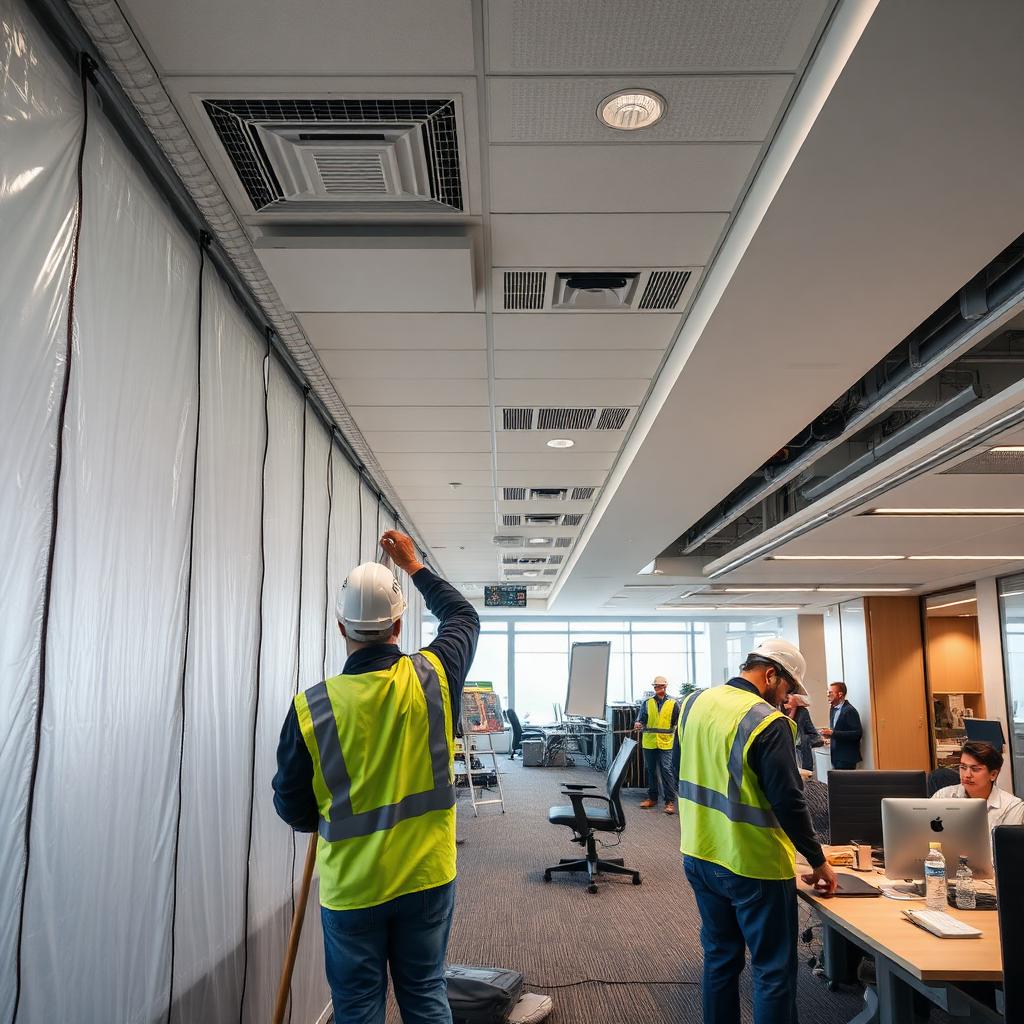
Mold inspection in Mississauga for commercial buildings
Mold inspection in Mississauga for offices, retail units, warehouses, clinics and multi-tenant buildings starts with one question: how far has the moisture and growth spread? Sofisa Group Inc. is a WSIB-cleared and insured Ontario commercial general contractor and mould abatement contractor based in Mississauga. We coordinate mould inspection and assessment for property managers, facility managers and building owners after a leak, a flood or an HVAC problem, and then carry out the remediation.
We are not a laboratory or an independent consultant. Where sampling or a formal assessment is needed, a qualified assessor and an accredited lab do that work; we coordinate it and turn the findings into a remediation scope.
When a commercial mould assessment makes sense
Mould in commercial buildings usually follows water. Common triggers include:
- A roof, window or plumbing leak that soaked ceilings, walls or flooring
- A flood or sprinkler discharge
- Condensation or drainage problems in HVAC equipment and ductwork
- A musty odour or occupant complaints with no visible source
- Staining or growth found during a renovation or tenant turnover
If the water event is recent, drying comes first. Our water damage restoration in Mississauga service handles that stage.
What the inspection covers
A commercial mould inspection is about finding the extent of the problem, not just the visible patch:
- Visual inspection of affected rooms, ceiling spaces, wall cavities where accessible, and mechanical areas
- Moisture mapping with meters to find wet materials beyond the visible damage
- Source identification, so the leak or condensation is fixed before remediation
- Sampling where needed, taken by a qualified assessor and analyzed by an accredited lab, for example when growth is hidden or occupants have concerns
- A written scope showing which materials and areas need remediation
Mould testing in Mississauga: when sampling is worth it
Not every commercial mould job needs lab samples. When the growth is visible, the cause is known and the affected materials are coming out anyway, sampling rarely changes the scope. It earns its cost when growth is hidden in a wall cavity or ceiling space, when occupants are complaining but nothing is visible, when an insurer or landlord wants documented results, or when you need to confirm that the cleanup worked. In those cases a qualified assessor takes air or surface samples and an accredited lab analyzes them. We coordinate the assessor, go through the results with you and fold them into the remediation scope, so the testing answers a question instead of producing a report nobody uses.
How we coordinate mould assessment and inspection
- Call and triage. We ask about the water event, the building and how the space is being used, so the right areas get inspected first.
- Site inspection and moisture mapping. We inspect and map moisture across the affected areas.
- Assessor and lab, where needed. We coordinate a qualified assessor and lab sampling when the scope calls for it.
- Remediation scope. The findings become a scope: containment, removal of affected materials, cleaning and drying, and what has to be rebuilt.
- Remediation and rebuild. We carry out the work and the rebuild. Post-remediation verification is done by the qualified third party, not by us on our own work.
Inspection in occupied commercial space
Most of our clients can't close the building. We plan inspections around tenants and operating hours, keep the areas being opened isolated, and explain the findings in plain terms for the property manager and, where needed, the insurer. For insurance and certification questions, see mold removal in Mississauga: IICRC and insurance.
Black mould and other visible growth in commercial space
Staff and tenants often call it black mould. The colour doesn't tell you the species or how far the problem goes, and it doesn't change how the work is done: the area is contained, the water source is fixed, damaged porous materials are removed past the visible growth, and the space is cleaned and dried before anything is rebuilt. If an insurer, a landlord or occupant concerns call for a species identification, that comes from the assessor's sampling, not from the colour on the wall. For the removal itself, see mould remediation in Mississauga.
From inspection to remediation
Once the scope is set, the work moves to remediation. See mould remediation in Mississauga for how containment and removal are handled on site, and our mould remediation services for the wider GTA. For what drives the price of remediation, read our commercial mould remediation cost guide. We price each job from the inspection findings rather than a rate sheet.
Because Sofisa does the inspection coordination, the remediation and the rebuild, you deal with one contractor from the first site visit to handover.
What to have ready for the inspection
The inspection goes faster when we know the history. Before the visit, gather what you can:
- When the leak, flood or HVAC problem happened and how long materials stayed wet
- Which floors, units or rooms were affected, and any photos taken at the time
- Any repairs already made to the roof, plumbing or mechanical systems
- Tenant or occupant complaints, and where they came from
- Insurance claim details, if a claim has been opened
With that information, the inspection can focus on the right areas, and the remediation scope can be written in a way your insurer and your tenants can follow. When you're ready, contact us or call to book the visit.
Frequently asked questions
Related resources
Signs of mould in your building?
Tell us what happened and where. We'll arrange the inspection and give you a clear remediation scope.